

Best Retro Style Bluetooth Speakers 2026: Buying Guide
Table of Contents
- Why Retro Style Bluetooth Speakers Are Worth It in 2026
- What to Look For in the Best Vintage Bluetooth Speakers
- How to Find a Retro Bluetooth Speaker With Good Sound Quality
- Portable Retro Bluetooth Speaker: What to Check Before You Travel
- Choosing a Retro Bluetooth Speaker for Home Use
- Retro Design vs Modern Performance: What Actually Matters
- Common Mistakes When Buying Retro Style Bluetooth Speakers
- Conclusion
- Frequently Asked Questions
Last Updated: October 9, 2026
Why Retro Style Bluetooth Speakers Are Worth It in 2026
The best retro style Bluetooth speakers 2026 buyers can find solve a problem that plain plastic boxes never will: they sound good and look like something you actually want on your shelf. People want warm sound, tactile knobs, and a wood finish, but they worry the looks come at the cost of performance. They usually don't.
That worry is worth taking seriously, though. Design-led audio is a crowded category, and not every vintage-looking box earns its price.
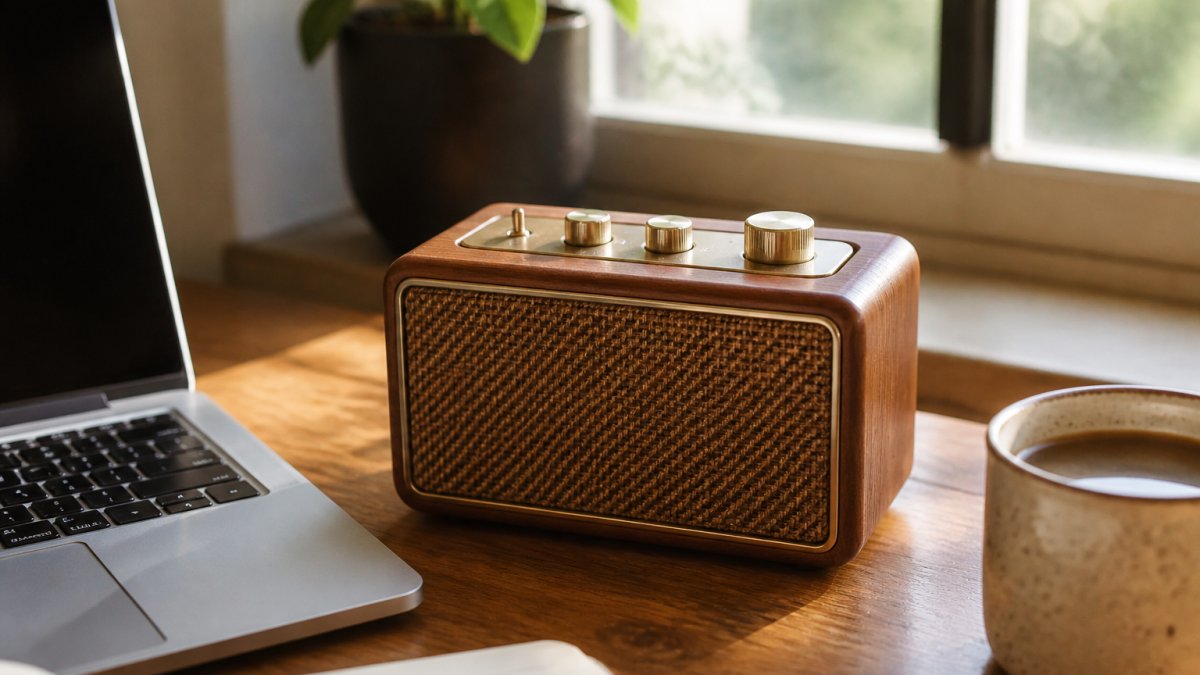
The appeal comes down to three things. First, retro design uses materials that age well, so the speaker still looks intentional five years later. Second, the controls are physical, which means no app required to change the volume. Third, the sound profile tends toward warm mids rather than harsh treble, which suits long listening sessions.
Here's what most buying guides get wrong: they treat retro as a finish option. It isn't. Design era and materials change how a speaker sounds, how it wears, and how long it stays useful. Below, we break down what actually separates a good retro Bluetooth speaker from a decorative one, and how to pick the right model for your room, your bag, and your budget.
What to Look For in the Best Vintage Bluetooth Speakers
The best vintage Bluetooth speakers balance three things: materials that suit the design era, modern wireless features, and a driver setup that matches your room.
Start with the checklist below. It covers the decisions that matter most.
- Confirm the cabinet material: real wood veneer, MDF with wood finish, or metal
- Check the Bluetooth version (5.0 or newer is the practical baseline)
- Note the driver size and whether there's a dedicated woofer
- Verify battery capacity if you plan to move it between rooms
- Check for AUX input or a memory card slot as a fallback
- Confirm the control layout: physical knobs or app-only
- Look for a stated charge time, not just playtime
Design Era and Materials: Wood, Metal, and Brass
Retro isn't one style. It's at least three, and each era implies different materials.
Mid-century modern leans on walnut or teak veneer, tapered legs, and fabric grilles. It suits living rooms with warm wood furniture.
1950s diner and radio styling uses chrome, cream plastic, and rounded edges. These read as playful and work well in kitchens.
Industrial and steampunk favors exposed metal, brass-toned controls, and visible screws. This is the most tactile group and the hardest to match with modern decor.
Materials decide durability more than era does. Solid wood and metal enclosures resist rattling at high volume. Thin plastic housings tend to buzz when the bass hits.
Modern Features That Matter: Bluetooth 5.0 and Beyond
A retro shell shouldn't mean retro connectivity. Bluetooth 5.0 is the sensible floor in 2026. It gives you a more stable connection and lower power draw than older versions.
Beyond that, look for:
- AUX input for wired sources and older devices
- Memory card support for offline playback
- Multi-speaker pairing if you want stereo sound from two units
- Voice assistant support only if you'll actually use it
- USB-C charging for faster top-ups and fewer cables
Wi-Fi streaming is rare on retro-styled speakers. If that matters to you, treat it as a separate purchase rather than a feature to hunt for.
How to Find a Retro Bluetooth Speaker With Good Sound Quality
A retro Bluetooth speaker with good sound quality will state its driver size, frequency response, and power output. If a listing hides those numbers, that's your answer. But specs alone won't tell you whether a vintage-styled cabinet actually sounds like its looks promise.

Sound quality in this category comes down to four measurable things. Driver size sets how much air the speaker can move. Frequency response tells you how low the bass goes. Amplifier power determines how loud it gets before distorting. Cabinet rigidity controls whether the enclosure colors the sound.
Here's what most spec sheets won't tell you: appearance-led speakers are often tuned for warmth, not accuracy. That's not a flaw. Warm tuning suits jazz, acoustic, and vocal music, and it's easier on the ears over long sessions. If you mostly listen to dense electronic music, check whether the speaker has a dedicated woofer before buying.
Does Retro Styling Cost You Sound? A Design-Era Breakdown
The honest answer is that styling itself doesn't hurt sound, but the construction choices that come with certain eras do. Here's how the three main retro design families tend to behave when you listen critically.
Mid-century modern (walnut or teak veneer, fabric grille, tapered legs). These cabinets are usually the largest of the three, which gives the driver more internal air to work with. The trade-off is that thin veneer over MDF can resonate at high volume if the bracing is minimal. Listen for a hollow thump on kick drums, that's cabinet flex, not bass.
1950s diner and radio styling (chrome, cream plastic, rounded edges). These tend to be the smallest and most portable, which means smaller drivers and shallower bass. They often sound bright and forward, which flatters vocals and podcasts but can turn harsh on cymbals and synths. If you listen mostly to spoken word or acoustic guitar, this tuning works. If you want chest-thump bass, it won't deliver it.
Industrial and steampunk (exposed metal, brass-toned controls, visible screws). Metal enclosures are the most rigid of the three, so they resist rattling best. The catch is weight, a metal cabinet that's genuinely rigid is rarely a bag-friendly speaker. These also tend to have the most tactile controls, which matters more than most buyers expect.
The Listening Test That Separates Warm From Muddy
Warm tuning and muddy tuning can look identical on a spec sheet. The difference is whether the bass stays defined when the volume climbs. Here's a repeatable test you can run in a store or during a return window.
- Pick one familiar track you've heard hundreds of times. You need a reference, not a demo song.
- Listen at low volume first. Vocals should sit clearly above the bass line. If they're already buried, the tuning is too bass-heavy for your taste.
- Push to about 70% volume. This is where cheap cabinets start to buzz and small drivers start to compress. Listen for the bass line turning into a single undifferentiated thump.
- Step back three feet. Retro speakers are often near-field designs, meaning they sound best close up. If the sound collapses when you move away, it's a desk speaker, not a room speaker.
- Check stereo separation if it's a two-driver unit. Play something with hard-panned instruments. If both channels sound like they're coming from the same point, the cabinet is too narrow for real stereo imaging.
What to Compare Side by Side
For a fair comparison, judge speakers on the same criteria, and add the two columns most roundups leave out.
| What to Check | Why It Matters | What Good Looks Like |
|---|---|---|
| Driver size | Sets bass depth and overall loudness | Stated clearly in the listing |
| Frequency response | Shows how low the speaker reaches | Low end stated, not just a range |
| Amplifier power | Determines clean maximum volume | Watts listed with the driver spec |
| Cabinet material | Controls rattling and resonance | Wood, metal, or rigid composite |
| Cabinet bracing | Separates warm from muddy at volume | Mentioned in reviews or teardowns |
| Tuning intent | Tells you what music it flatters | Warm, neutral, or bright stated |
Independent testing and listening tests are useful when they're published, but most retro models don't get reviewed by major outlets. In that case, rely on the specs, the return policy, and your own ears.
Portable Retro Bluetooth Speaker: What to Check Before You Travel
A portable retro Bluetooth speaker has to survive three things: movement, moisture, and being packed badly. Weight and dimensions matter more here than in any other category.
Check these before you buy:
- Weight: under about 500g is comfortable in a bag; heavier units stay home
- Dimensions: confirm it fits your bag's side pocket, not just your desk
- Battery life: look for a stated playback time and charge time separately
- Water and dust resistance: an IP rating tells you what it can handle
- Controls: physical knobs are easier than apps when you're moving
Battery claims deserve scrutiny. A speaker rated for several hours of playback at moderate volume will run shorter at full loudness. Charge time matters too. A unit that takes hours to refill is annoying on a weekend trip.
For a genuinely compact option, our Mini Retro White Noise Bluetooth Speaker measures 5.6 x 6 x 2.64 inches and runs on a 1500mAh battery with 4-6 hours of playtime. It recharges in 2-3 hours over USB, and the built-in nature sounds make it useful on flights and in unfamiliar hotel rooms. That combination of portability and function is rare in retro-styled gear, which is why it's our pick for travel.
Choosing a Retro Bluetooth Speaker for Home Use
A retro Bluetooth speaker for home use should match the room it lives in, not just your music taste. Placement and size decide more of the result than the spec sheet does. But the decision doesn't end at the room, it extends to how long the speaker stays useful and whether you can keep it running.
Room-by-Room Recommendations
Desk and study. Compact units with physical controls you can adjust with one hand win here. You're within arm's reach, so near-field tuning sounds full even at low volume. Look for a speaker under about 8 inches wide so it doesn't crowd your monitor. A screen-off mode matters if the speaker sits beside your display.
Mini Retro White Noise Bluetooth Speaker →
Kitchen. Moisture and grease are the real risks, not volume. A speaker with an IP rating handles steam and splashes; one without it belongs on a high shelf away from the stove. Physical knobs beat app control when your hands are wet or full. Cream-and-chrome 1950s styling reads best against tile and stainless.
Living room. This is where cabinet size earns its keep. A larger cabinet with a real woofer fills the space; a compact unit will sound thin from across the room. Place it on an open shelf rather than pressed against a wall, a speaker against drywall sounds boomy, and corner placement exaggerates bass, which helps small speakers but muddies large ones.
Bedroom. Ambient features matter more than raw output here. Look for dimmable or screen-off lighting, white noise or nature sounds, and a volume floor low enough for late-night listening. A speaker that can't go quiet is a speaker you'll stop using.
Patio and outdoor. Confirm an IP rating before anything else. Retro-styled speakers frequently have none, which means rain, poolside splashes, and humidity are all risks. If the listing doesn't state a rating, treat the speaker as indoor-only regardless of how rugged the design looks.
Travel and gifting. Weight under about 500g, dimensions that fit a bag's side pocket, and a stated charge time, not just playtime. As a gift, retro styling does a lot of the work, but a return policy matters more, because sound preference is personal.
Long-Term Ownership: What to Check Before You Commit
A retro speaker is often bought as a long-term object, so the ownership questions matter more than they do for a disposable plastic box. Here's what to verify before you buy.
Battery replacement. Most portable Bluetooth speakers use a sealed lithium-ion pack. Ask whether the battery is user-replaceable or service-replaceable. A sealed pack that dies in three years turns a working speaker into e-waste. If the listing doesn't say, assume it's sealed.
Warranty length and what it covers. A one-year warranty is common; two years is a sign the maker expects the electronics to last. Check whether the warranty covers the battery, since that's the part most likely to fail first.
Serviceability and parts. Simpler electronics with fewer integrated systems tend to be easier to keep running. Physical knobs and standard inputs (AUX, USB-C) are more repairable than touch panels and proprietary docks. If a maker publishes replacement parts or repair guides, that's a strong signal.
Expected lifespan. A well-built retro speaker with a replaceable battery can reasonably serve five to ten years.
Firmware and app dependence. A speaker that needs an app for basic functions is only as good as the app's support window. Physical controls and standard Bluetooth pairing don't expire.
For bedroom and desk setups, useful features include:
- Ambient lighting that doubles as a night light
- White noise or nature sounds for sleep and focus
- A screen-off mode so nothing glows while you sleep
- AUX or card input for sources your phone can't stream
Our Mini Retro White Noise Bluetooth Speaker covers that brief well. It includes four nature sounds (ocean waves, crackling bonfires, insects and birds, and flowing streams), RGB ambient lighting with a water-ripple effect, and a screen-off function for night use. Bluetooth 5.0, AUX input, and TF card support mean you're not locked into one playback method, and the 360-degree surround sound fills a small room without needing a second unit.
Retro Design vs Modern Performance: What Actually Matters
Retro design and modern performance are not in conflict. The trade-off buyers imagine, that vintage looks mean compromised sound, mostly isn't real. What you actually give up is usually smart features, not audio quality.
Here's the honest split. A retro speaker typically skips voice assistant integration, app-based EQ, and Wi-Fi streaming. In exchange, you get physical controls, materials that don't look dated in three years, and often a warmer tuning than mass-market alternatives.
Three things genuinely matter when you weigh the two:
- Controls. Physical knobs beat apps for daily use. No pairing dance, no firmware updates.
- Materials. Wood and metal enclosures resist the rattling that thin plastic develops.
- Tuning. Warm sound suits long listening; bright sound suits short, critical sessions.
What most reviews miss is repairability. Simpler electronics with fewer integrated systems tend to be easier to keep running, and a speaker you can still use in five years beats one with features you stopped using in six months.
Common Mistakes When Buying Retro Style Bluetooth Speakers
Most bad purchases in this category come down to five repeatable errors.
Buying on looks alone. A speaker is an audio device first. If the listing doesn't state driver size or power, you're buying furniture.
Ignoring the control layout. App-only control on a retro-styled speaker defeats the point. Check for physical knobs before you commit.
Overlooking battery realities. Playtime claims are measured at moderate volume. Plan for less at full loudness, and check the charge time too.
Assuming portability means durability. No IP rating means no outdoor use, regardless of how rugged the design looks.
Skipping the return policy. Sound is subjective. A shop that lets you send it back if the tuning isn't right removes most of the risk of buying online.
Conclusion
The hard part isn't finding a retro-styled speaker. It's finding one that still sounds good after the novelty wears off. That means checking driver specs, control layout, and battery claims before you fall for a finish.
Electro Gift Shop curates audio gear that blends nostalgic design with modern function, so you're not choosing between the two. Our Mini Retro White Noise Bluetooth Speaker pairs Bluetooth 5.0, AUX, and TF card playback with four nature sounds, RGB ambient lighting, and a rechargeable 1500mAh battery, all in a cabinet small enough for a bedside table or a carry-on. Customers like Sarah L. call it handy and flawless in daily use, and Daniel M. was surprised by the performance for the size.
Shop Now and find a speaker that earns its spot on your shelf.
Frequently Asked Questions
Are retro Bluetooth speakers as good as modern-looking speakers?
They can be. Sound quality depends on the drivers, amplifier, and cabinet design, not the exterior. Many retro style Bluetooth speakers use the same Bluetooth 5.0 chips and full-range drivers as modern designs. What changes is the tuning: some retro models favour warm mid-range for jazz and vocals, while modern speakers often push bass harder. Check frequency response and wattage specs before assuming looks mean compromise.
What features should I look for in a retro-style Bluetooth speaker?
Prioritise Bluetooth version (5.0 or later for stable range), battery capacity in mAh, playback time in hours, and charging time. For home use, check whether it has AUX input or Wi-Fi streaming. For travel, look at weight and dimensions. Controls matter too: physical knobs and buttons are easier to use than touch panels, especially with wet or gloved hands. Water and dust resistance ratings help if you plan to use it outdoors.
Which retro Bluetooth speakers are best for travel?
Look for a portable retro Bluetooth speaker under 1 kg with at least 4-6 hours of playback and a rechargeable battery. Compact dimensions matter: a unit around 14 x 15 x 7 cm fits easily in a backpack. Check that the controls are recessed or protected so they do not turn on accidentally in transit. A carry handle or strap loop is a practical bonus. Sweat and splash resistance helps if you take it to the gym or beach.
How do I choose a retro Bluetooth speaker for home use?
Start with the room. A retro Bluetooth speaker for home in a study or bedroom can be compact, but a living room needs more volume and bass. Check whether the speaker supports multi-speaker pairing or stereo sound if you want to fill a larger space. Look for wood or metal finishes that match your decor, and consider whether you need voice assistant support. A speaker with both Bluetooth and AUX input gives you flexibility for TV or turntable connections.