

Pottery Barn Alternative for Home Decor: 2026 Guide
Table of Contents
- Why Shoppers Look for a Pottery Barn Alternative
- What the Pottery Barn Look Actually Costs
- Affordable Home Decor Brands Like Pottery Barn
- Material Composition: What Separates Quality From Cheap
- Sustainability and Ethical Sourcing to Look For
- Return Policies and Shipping Logistics Compared
- How to Style Home Decor for a Luxury Look
- Seasonal Decor Lookalikes That Hold Up
- Budget-Friendly Home Decor Finds That Last
- Frequently Asked Questions
Last Updated: September 30, 2026
Why Shoppers Look for a Pottery Barn Alternative
Shoppers hunt for a Pottery Barn alternative because the signature look, warm woods, soft textiles, and layered lighting, rarely justifies the full-price tag.
The gap between what a room looks like in a catalog and what it costs to recreate is wider than most people expect. A single accent chair can run into four figures, and that is before shipping. Multiply that across a living room and the budget disappears fast.
So the smarter move is not to abandon the look. It is to rebuild it piece by piece, mixing affordable home decor brands like Pottery Barn with a few well-chosen splurges. Below, we break down what the style actually costs, where to shop, and how to tell quality from filler.
What the Pottery Barn Look Actually Costs
The Pottery Barn aesthetic is built on neutral palettes, natural materials, and soft, warm lighting. Recreating that formula at full retail is where budgets break, because the cost sits in the base pieces, not the accessories.
A typical living room refresh breaks down into three price tiers:
- Base furniture: sofas, chairs, and tables carry the highest price point
- Textiles: rugs, throws, and cushions add up quickly across a whole room
- Accent pieces: lamps, vases, and small decor are where you can save the most
Most shoppers overspend on the first tier and underspend on the third. That is backwards. The accents are what make a room read as styled, and they are the cheapest to swap.
Affordable Home Decor Brands Like Pottery Barn
Affordable home decor brands like Pottery Barn fall into two camps: retailers that copy the aesthetic outright, and online destinations that let you curate the look yourself. The second group is where the real savings live.
Online Destinations That Nail the Aesthetic
Online shopping has changed how people build a room. Instead of buying a whole set from one retailer, you can pull individual pieces from several sources and assemble something that looks curated rather than catalog-ordered.
That approach works best when you know your design language first. Decide whether you are going modern, minimalist, or rustic before you buy anything. Then every piece you add either fits or it does not.
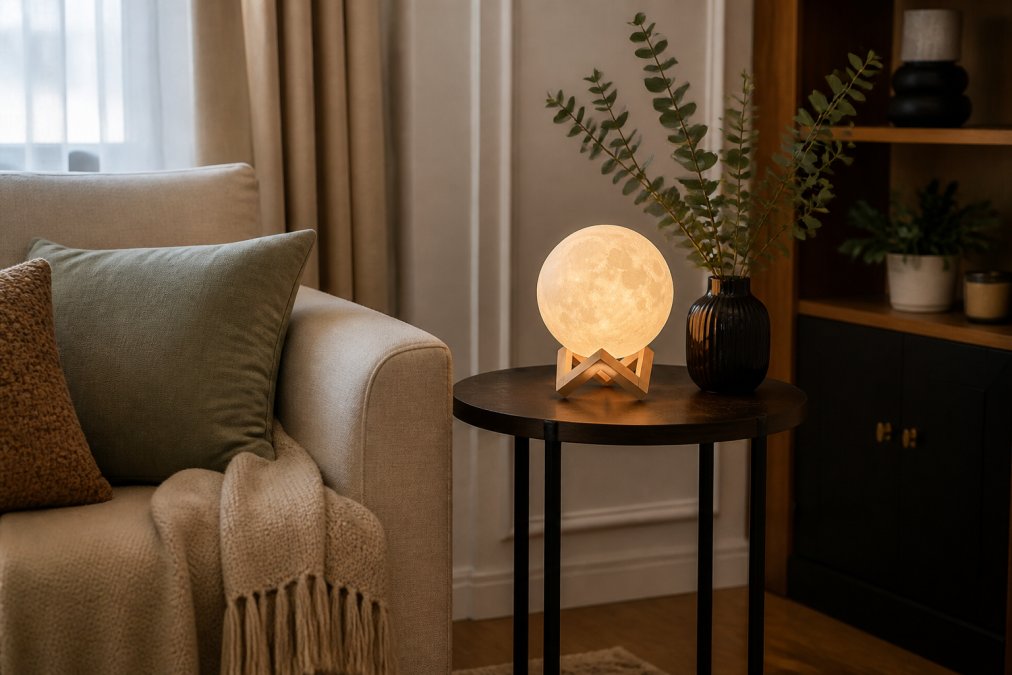
Smaller online shops often carry the accent pieces that big retailers overlook. A good example is a compact decorative lamp that adds warm, ambient light to a side table without the showroom markup.
What to Check Before You Buy
Before you commit to any retailer, run through a short checklist. It saves returns and regret.
- Does the listing state the actual material, not just "wood" or "fabric"?
- Are there real customer reviews with photos?
- Is the return window at least 30 days?
- Are shipping costs disclosed before checkout?
- Does the piece match your existing design language?
That last point matters more than people think. A beautiful piece that clashes with everything you own is still a bad buy.
Material Composition: What Separates Quality From Cheap
Material composition is the single clearest signal of whether a piece will last. Two sofas can look identical online and behave completely differently after two years, and the difference is almost always in what they are made of, and how they are put together.
Most guides stop at the material name. That is not enough. A "solid wood" frame can still fail if the joinery is weak, and a "linen" cushion can pill in months if the weave is loose. The real quality signals live one layer deeper: construction method, finish type, and fiber grading.
Wood and Frame Construction
Start with the frame, because it determines whether a piece stays square and stable.
| Material | Durability | Best For | Watch Out For |
|---|---|---|---|
| Solid hardwood (oak, maple, ash) | High | Tables, chair frames, bed frames | Higher price; heavier to move |
| Kiln-dried pine | Medium-high | Bed frames, benches, budget case goods | Dents easily; can split if not sealed |
| Engineered wood (MDF, particleboard) | Low-medium | Shelving, budget cabinets, accent tables | Swells and crumbles if moisture reaches the core |
| Plywood with hardwood veneer | Medium | Dressers, media consoles | Veneer can chip at edges; core quality varies |
| Metal (steel, aluminum) | High | Legs, frames, industrial styles | Can scratch; welds are the weak point |
What most guides miss is that construction matters as much as material. Look for these specific markers in product descriptions or photos:
- Corner blocking and glue blocks, triangular supports at the inside corners of case goods. They stop racks and wobbles.
- Dovetail or mortise-and-tenon joints, interlocking joints that resist pulling apart. Butt joints held by screws alone are the cheapest and weakest option.
- Kiln-dried vs. air-dried wood, kiln-dried lumber is heated to a low moisture content, which reduces cracking and warping after delivery.
- Screw vs. bolt assembly, bolts with threaded inserts hold up to repeated disassembly and reassembly far better than screws driven directly into wood.
A solid wood frame with poor joinery will still wobble. A plywood frame with dovetail drawers can outlast a cheap solid-wood piece. Judge the whole build, not just the label.
Upholstery and Textiles
Fabric durability is usually expressed as a double rub count, a measure of how many abrasion cycles a fabric survives before showing wear. Higher is better, but the right number depends on the use:
- Light use (decorative pillows, throws): 3,000-6,000 double rubs is acceptable.
- Moderate use (occasional chairs, headboards): 9,000-15,000 double rubs.
- Heavy use (family sofas, dining chairs): 15,000-30,000+ double rubs.
Fiber choice matters too:
| Fiber | Durability | Best For | Watch Out For |
|---|---|---|---|
| Wool | High | Rugs, upholstery, throws | Needs careful cleaning; can felt if washed hot |
| Cotton-linen blend | Medium | Cushions, throws, slipcovers | Wrinkles; fades in direct sun |
| Performance polyester | Medium-high | Family sofas, dining seats | Can pill over time; less breathable |
| Rayon/viscose | Low-medium | Decorative pillows, drapes | Weak when wet; prone to stretching |
| Leather (top-grain) | High | Sofas, chairs | Requires conditioning; scratches show |
| Bonded leather | Low | Budget seating | Peels and flakes within a few years |
A common pattern is that shoppers focus on the visible fabric and ignore the cushion core. High-resilience (HR) foam holds its shape far longer than standard polyurethane foam, and wrapped coils or pocket springs inside cushions prevent the flat, saggy look that makes a sofa feel cheap after a year.
Finish and Hardware
Finish is the last quality layer and the easiest to overlook online.
- Lacquer and polyurethane are durable, moisture-resistant topcoats. They resist spills and daily wear.
- Oil and wax finishes look warmer and can be repaired locally, but they need re-oiling and show water rings more easily.
- Powder-coated metal resists chipping better than painted metal.
- Solid brass or stainless steel hardware outlasts plated zinc, which can flake or discolor.
None of this requires a chemistry degree to check. Product pages that name the finish, the joinery, and the fabric rub count are signaling that the maker expects scrutiny. Pages that stay vague are usually vague for a reason.
A Quick Pre-Purchase Material Checklist
- Is the frame solid hardwood, kiln-dried, or at least plywood, not particleboard?
- Are joints described as dovetail, mortise-and-tenon, or corner-blocked?
- Is the fabric rub count stated, and does it match your use level?
- Is the cushion foam high-resilience, with coils or springs if it is a main seat?
- Is the finish named (lacquer, poly, oil) rather than just "wood finish"?
- Is the hardware solid metal rather than plated?
If a listing answers most of these, you are looking at a piece built to last. If it answers none, you are buying the look and hoping for the best.
Sustainability and Ethical Sourcing to Look For
Sustainability in home decor comes down to three things: where the material came from, how it was finished, and how long it will last. A piece that survives a decade is inherently more sustainable than three cheap replacements.
Look for retailers that name their suppliers and disclose finishes. Certifications matter here. The Forest Stewardship Council certification standards verify that wood comes from responsibly managed forests, and that label is one of the few you can actually check.
Beyond certification, ask two questions:
- Will this piece still look good in five years?
- Can it be repaired rather than replaced?
Textiles deserve the same scrutiny. Natural fibers like wool and cotton biodegrade, while synthetic blends shed microplastics with every wash. If you care about ethical sourcing, prioritize natural materials and brands that publish their supply chain.
D5 Starry Moon Lamp 8Cm - LED Night →
Return Policies and Shipping Logistics Compared
Return policy and shipping logistics are where online furniture shopping gets genuinely risky. A generous return window means nothing if return shipping costs more than the item itself, and a low sticker price can be erased by a restocking fee or a freight charge you did not see until checkout.
Most guides list return windows and stop there. The useful version explains how the costs actually work, so you can price the real risk before you click buy.
How Return Costs Actually Stack Up
When you return a large item, you may face up to four separate charges:
- Outbound shipping, what you paid to receive it. Usually non-refundable.
- Return shipping, what it costs to send it back. For furniture, this is often a freight charge, not a parcel rate.
- Restocking fee, a percentage some retailers keep to cover repackaging and inspection. Commonly 10-25% on furniture, sometimes waived if you accept store credit.
- Original packaging requirement, many retailers refuse returns without the original box or pallet, which is a real problem once you have recycled it.
A common pattern is that the return cost on a large sofa can approach or exceed the price difference between a budget retailer and a mid-tier one. That does not mean avoid budget retailers, it means factor the return risk into the price you are willing to pay.
Shipping Methods and What They Mean for You
| Method | Typical Use | What to Check |
|---|---|---|
| Parcel (UPS/FedEx/USPS) | Small decor, lamps, textiles | Tracking, insurance, delivery confirmation |
| Curbside freight | Sofas, large case goods | Whether liftgate service is included |
| Threshold delivery | Mid-size furniture | Whether the driver brings it inside the door |
| White-glove delivery | Premium furniture | Assembly, packaging removal, placement |
| Drop-ship from maker | Many online-only brands | Who handles damage claims, retailer or maker |
Two details trip up most buyers:
- Liftgate service. If you do not have a loading dock, a freight truck cannot lower a heavy pallet without a liftgate. Some carriers charge extra for it, and some deliveries fail without it.
- Damage claims. Freight damage must usually be noted on the delivery receipt at the moment of delivery. If you sign clean and find damage later, the claim gets much harder.
A Practical Decision Framework
Before buying any piece online, run this quick calculation:
- Total risk cost = outbound shipping + potential return shipping + potential restocking fee.
- If that number is more than about 20% of the item price, treat the purchase as final-sale and only buy if you are confident in the fit, color, and dimensions.
- If it is under 10%, the return option is cheap enough to buy with less certainty.
For decor items and accessories, the risk is lower and the calculus changes. A small lamp or speaker ships cheaply and rarely arrives damaged, so a strict return policy is less of a dealbreaker there. The higher the item price and the bulkier the box, the more the return terms should drive your decision.
What to Verify Before Checkout
- Is the return window at least 30 days from delivery, not from order date?
- Is return shipping free, capped, or calculated at cost?
- Is there a restocking fee, and does it apply to your item category?
- Is the original packaging required for return?
- Is liftgate or inside delivery included, or an add-on?
- Who handles damage claims, the retailer or the manufacturer?
- Are reviews mentioning shipping damage and support responsiveness, not just product quality?
The honest trade-off: smaller online retailers sometimes have leaner logistics than large chains. What they often compensate with is better packaging and more responsive support. Check reviews that mention shipping specifically, because that is where the real friction shows up.
How to Style Home Decor for a Luxury Look
Styling for a luxury look is about restraint, not spending. The rooms that read as expensive usually have fewer pieces, better light, and more texture than the ones that look cluttered.
Three rules do most of the work:
- Layer your lighting. Overhead light alone flattens a room. Add a warm table lamp or two at different heights.
- Mix textures, not patterns. Wool, linen, wood, and ceramic together feel rich. Four competing prints feel chaotic.
- Leave negative space. Empty surface area reads as intentional. Full surfaces read as storage.
Warm ambient lighting is the fastest upgrade. A small decorative lamp on a side table adds a soft glow that no overhead fixture can replicate, and it costs far less than new furniture. At Electro Gift Shop, our D5 Starry Moon Lamp does exactly this job: an 8cm battery-powered accent that casts a soft starry glow and sits on any bedside table or shelf without needing an outlet.

Style-Specific Approaches: Modern, Minimalist, Rustic
Each design language calls for a different mix. Matching your accent pieces to your style is what separates a curated room from a random one.
Modern: clean lines, low-profile furniture, and one statement piece per surface. Keep the palette to two or three colors.
Minimalist: fewer objects, more negative space. Every item earns its place. Textiles stay neutral and texture does the talking.
Rustic: natural wood tones, visible grain, and layered textiles. Warm lighting is essential here, so lean toward amber or soft-white bulbs.
The common thread across all three is lighting temperature. Cool white light makes any room feel clinical, regardless of the furniture.
Seasonal Decor Lookalikes That Hold Up
Seasonal decor is where lookalikes shine, because you are buying for a few months, not a decade. The trick is choosing pieces that survive storage and reappear next year without looking tired.
Focus on items with solid construction and neutral base colors. A well-made ceramic vase works for autumn, winter, and spring with nothing more than a swap of what goes inside it. Cheap plastic decor cracks in storage and gets replaced annually, which costs more over time.
Budget-Friendly Home Decor Finds That Last
Budget-friendly decor that lasts comes down to buying fewer, better accent pieces and skipping the disposable middle. The category where this pays off most is lighting and small electronics.
A compact Bluetooth speaker or ambient lamp earns its place because it works year-round and moves between rooms. The Mini Retro White Noise Bluetooth Speaker is a good example: a 5.6-inch retro-styled unit with Bluetooth 5.0, four built-in nature sounds, RGB ambient lighting, and a 1500mAh battery that runs 4-6 hours per charge. It doubles as decor and function, which is the whole point.

Customers tend to echo the same theme. Sarah L. put it simply: "This gadget is so handy and works flawlessly." That is the standard to hold budget decor to. If a piece does not earn its space, it is not a saving, it is clutter.
The real challenge with building a Pottery Barn look on a budget is not finding cheap pieces. It is finding pieces that hold up and fit your design language.
Frequently Asked Questions
What is a cheaper alternative to Pottery Barn?
Several online retailers offer similar aesthetics at lower price points. Look for brands that specialize in home furnishings with a curated, modern or rustic feel. Many direct-to-consumer shops sell accent pieces, textiles, and decor at 30-50% less than traditional retail. The key is checking material quality and customer reviews before buying, since lower prices sometimes mean thinner construction or shorter warranties. Focus on retailers with transparent return policies so you can assess quality risk-free.
How can I get the Pottery Barn look on a budget?
Start with the pieces that anchor a room: lighting, textiles, and one statement accent. Affordable home decor brands like Pottery Barn alternatives often sell these categories at accessible price points. Mix budget finds with a few higher-quality items you already own. Stick to a consistent design language, whether modern, minimalist, or rustic, so the room feels curated rather than pieced together. Small details like warm lighting and layered textures do most of the visual work.
Is there a cheaper version of Pottery Barn furniture?
Yes. Many online retailers sell furniture with similar silhouettes and finishes at lower price points. Check construction details: solid wood frames, dovetail joints, and kiln-dried hardwood last longer than particleboard. Read customer reviews for durability feedback, and confirm the return window before ordering. Some budget-friendly options use veneers over engineered wood, which can work well for accent pieces but may not hold up to daily heavy use in main living areas.
What should I check before buying decor online without seeing it in person?
Focus on three things: material composition, customer reviews, and return policy. Material listings tell you whether a piece is solid wood, veneer, or composite. Reviews reveal real-world durability and color accuracy. A generous return window (30 days or more) lets you assess quality at home. Also check shipping logistics: some retailers charge restocking fees or require original packaging for returns. These details matter more than brand name when you cannot visit a showroom.