

Why Choose Wired Audio Over Wireless: Sound Quality Guide
Table of Contents
- Wired vs Wireless Sound Quality: What Changes in the Signal Chain
- Latency in Wireless Audio: Why Timing Matters for Music and Monitoring
- DAC Importance for Wired Audio: The Component Most Buyers Ignore
- Reliability and Connection Stability: Bluetooth Interference vs a Direct Cable
- Battery Life, Charging Cycles, and Long-Term Ownership Costs
- Repairability and E-Waste: The Case for Gear That Lasts
- Portability, Travel, and Everyday Convenience: Where Wireless Still Wins
- How to Choose: A Decision Framework for Wired and Wireless Listening
- Conclusion
- Frequently Asked Questions
Last Updated: September 21, 2026
Wired vs Wireless Sound Quality: What Changes in the Signal Chain
Bluetooth has made music effortless, but it has also quietly changed what you actually hear. When you choose wired audio, the signal travels from your device to the driver without compression, pairing, or interference. That single difference explains most of the sound quality gap people notice but struggle to name.
At Electro Gift Shop, we hear the same question from customers again and again: if wireless is so convenient, why does a cable still sound better? The answer lives in the signal chain, the path your music takes from file to speaker. Wireless audio inserts extra steps into that path. Each step can shave off detail.
Here is the core of it. Wired audio is a direct electrical connection between your player and your headphones or speakers, while wireless audio converts the signal to radio waves, compresses it, and rebuilds it on the other end. Every conversion and compression step is a chance to lose something.
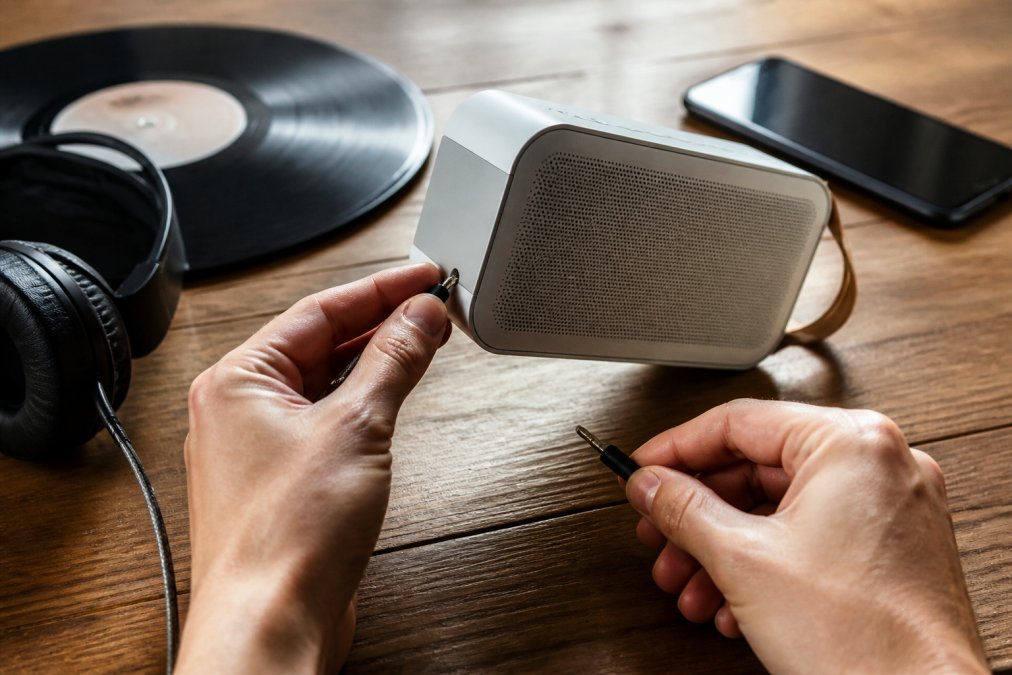
How Bluetooth Compression Alters What You Hear
Bluetooth cannot carry a full-resolution audio file in real time. It uses an audio codec to shrink the data before transmission, then decompresses it at the earbud or speaker. Codecs like SBC, AAC, and aptX handle this differently, but they all discard some information to keep the stream manageable.
That process is called signal compression, and it is lossy by design. Fine details, quiet background instruments, and the tail end of reverb often get trimmed first. On a busy pop track you may not notice. On a well-recorded acoustic album, the difference is obvious.
What Lossless Audio and High Bitrates Actually Deliver
Lossless audio keeps every bit of the original recording. A wired connection can carry that full stream without re-encoding it. Bluetooth, even with newer codecs, still compresses most consumer streams.
Bitrate tells the story. A wired analog signal has no fixed bitrate ceiling, while a Bluetooth stream typically runs at a fraction of the data rate of the source file. Higher bitrates preserve more detail, which is why audiophile-grade wired setups still dominate critical listening.
Latency in Wireless Audio: Why Timing Matters for Music and Monitoring
Latency in wireless audio is the delay between the source playing a sound and you hearing it. Bluetooth adds a small but measurable gap, usually enough to break lip-sync on video and throw off timing for musicians.
For casual listening, that delay is invisible. For anyone recording, mixing, or playing an instrument along to a track, it is a dealbreaker. A wired connection has effectively zero latency because the electrical signal arrives almost instantly.
Professional monitoring relies on that near-instant response. Studios use wired headphones for tracking sessions for exactly this reason. When timing matters, a cable is not nostalgia. It is a tool.
DAC Importance for Wired Audio: The Component Most Buyers Ignore
DAC importance for wired audio comes down to one job: turning digital files into an analog signal your headphones can actually play. Every phone, laptop, and player has a DAC built in, and its quality shapes what you hear.
Cheap DACs introduce noise, crosstalk, and harmonic distortion that muddy the soundstage. A dedicated DAC or a well-built source cleans that up. This is the component most buyers never think about, yet it often explains why the same headphones sound better on one device than another.
Digital-to-analog conversion is not a formality. It is the bridge between your files and your ears. If that bridge is weak, nothing downstream can fix it. Wired connections let you bypass a weak internal DAC by adding an external one, which is why portable DAC dongles have become popular with phone listeners.
Reliability and Connection Stability: Bluetooth Interference vs a Direct Cable
Bluetooth interference is the silent killer of a good listening session. Crowded apartments, trains, and offices are full of devices competing for the same wireless bands. When they collide, you get dropouts, stutter, and that frustrating half-second where the audio vanishes.
A wired connection has none of these problems. The signal stability of a direct cable is essentially perfect until the cable itself fails. No pairing process, no reconnection dance, no "device not found" message mid-song.
Electromagnetic interference can affect long or poorly shielded cables, but in normal use a decent cable is far more reliable than any wireless link. Plug it in and it works. That predictability matters more than most people admit until they have lost a connection at the wrong moment.
Battery Life, Charging Cycles, and Long-Term Ownership Costs
Wireless gear carries a hidden cost: it runs on batteries, and batteries wear out. Every charge cycle brings the cell closer to battery degradation, where it holds less power and eventually needs replacing. Wired headphones and speakers have no battery to worry about.
Most lithium-ion batteries in consumer audio gear are rated for somewhere between 300 and 500 full charge cycles before their capacity drops to roughly 80% of the original. That sounds like a lot, but consider the math. If you use wireless earbuds for two hours a day and charge them every other day, you hit 500 cycles in under three years. After that, you are looking at reduced playtime, more frequent charging, and eventually a battery that will not hold a charge at all.
Mini Retro White Noise Bluetooth Speaker →
Charging also adds friction. You have to remember to top up before a trip, carry the right cable, and plan around playtime limits. A wired set never asks for any of that.
| Factor | Wired Audio | Wireless Audio |
|---|---|---|
| Power source | None needed | Rechargeable battery |
| Battery degradation | Not applicable | 300-500 cycles to 80% capacity |
| Charging routine | None | Regular top-ups required |
| Typical failure point | Cable wear | Battery and electronics |
| Long-term cost | Low | Replacement or repair |
| Repairability | Cable and jack replaceable | Often sealed, battery not user-replaceable |
The ownership math favors wired over years of use. A cable might fray and need replacing, but that is a cheap fix. A sealed battery inside a wireless device often means the whole product becomes disposable. Many wireless earbuds are glued shut, making battery replacement impractical or impossible without damaging the housing. That turns a product that should last a decade into one that lasts two or three years.
This is not just a financial issue. It is an environmental one. The growing e-waste problem is driven in part by sealed batteries in small consumer electronics. Choosing wired gear is a small but concrete way to reduce that waste, because a wired headphone can be repaired and kept in service far longer than a wireless equivalent.
A wired headphone with a replaceable cable can outlast three or four pairs of wireless earbuds, saving money and reducing waste over the same period.
Repairability and E-Waste: The Case for Gear That Lasts
Wired gear is easier to repair, and that matters more now than it used to. A damaged cable can be swapped in seconds. A worn jack can be re-soldered. Wireless earbuds, by contrast, are often glued shut with batteries sealed inside, which makes repair impractical and feeds the growing e-waste problem.
Many buyers now weigh longevity alongside sound. Choosing a wired connection is partly an environmental decision, because gear that lasts longer generates less waste. It is also a financial one, since repairable products tend to cost less to own over time.
This is a real shift in how people shop for audio. Durability and repairability have moved from niche concerns to mainstream ones, and wired products have a natural advantage on both counts.
Portability, Travel, and Everyday Convenience: Where Wireless Still Wins
Wireless wins on convenience, and it is not close. No cable to tangle, no jack to find, no snag on a doorknob mid-commute. For the gym, a run, or a crowded train, the freedom of wireless transmission is genuinely hard to beat.
Travel is the clearest case. A compact wireless speaker or headband slips into a bag with nothing to untangle. If you want sound while you move, wireless is the practical pick.
The trick is not choosing a side forever. It is matching the connection to the moment. Wireless serves motion. Wired serves listening.
How to Choose: A Decision Framework for Wired and Wireless Listening
The right choice depends on where and how you listen, not on which technology is newer. Use this framework to decide.
- Listening at a desk or in one spot? Choose wired for full fidelity.
- Recording, mixing, or playing an instrument? Wired, always, for zero latency.
- Commuting, running, or working out? Wireless for freedom of movement.
- Long flights or travel days? Wireless for portability, wired for hotel listening.
- Want the best sound per dollar? Wired, since no battery or radio adds cost.
- Care about repairability and waste? Wired gear lasts and repairs more easily.
- Using a phone without a headphone jack? A USB-C audio dongle with a DAC bridges the gap.
For a compact option that covers relaxed listening at home or away, the Mini Retro White Noise Bluetooth Speaker blends a vintage look with Bluetooth 5.0, AUX input, and built-in nature sounds. Its AUX input gives you a wired path when you want one, and its 1500mAh battery runs 4-6 hours per charge. If you want comfort for long sessions, the Bluetooth Sleep Headband pairs ultra-thin speakers with up to 10 hours of playtime.


Conclusion
The wired versus wireless decision is not about picking a winner for all time. It is about knowing what each connection gives you, and choosing the one that fits the moment. When fidelity, timing, and longevity matter most, a cable still delivers what wireless cannot.
Electro Gift Shop curates audio gear that blends nostalgic design with modern function, so you can enjoy both approaches. Our products offer crystal-clear audio quality, portable and lightweight design, and reliable performance for work, play, or travel. As customer Daniel M. put it, "I'm amazed by the quality and performance of this product."
Get started with Electro Gift Shop and find gear that makes every moment sound better, whether you plug in or go wireless.
Frequently Asked Questions
Does wired audio actually sound better than wireless?
Yes, in most listening setups. A wired connection sends an uncompressed analog signal straight to your headphones or speakers, so nothing is lost to Bluetooth compression. Wireless audio relies on codecs that strip data to fit the transmission, which reduces dynamic range and fine detail. Wired audio also avoids the digital-to-analog conversion happening inside a compact Bluetooth chip, which is often the weakest link in the chain. The gap is most obvious on acoustic recordings, classical music, and anything with wide dynamic range.
Is there a noticeable latency difference between wired and wireless audio?
There is, and it matters more in some situations than others. Wired connections carry near-zero delay because the signal travels through copper, not through a codec and radio link. Bluetooth typically adds 100 to 300 milliseconds of delay depending on the codec and device. For casual music listening this is invisible, but for video editing, gaming, or live monitoring it causes lip-sync drift and timing errors you can feel. Wired audio removes that problem entirely.
Why are people switching back to wired headphones?
Three reasons come up most: sound quality, battery independence, and longevity. Wired headphones do not need charging, so they never die mid-commute. They also avoid battery degradation, which is the most common failure point in wireless gear. And because there is no battery or Bluetooth chip to fail, a good wired pair can last a decade with a cable swap. For listeners who care about how music actually sounds, the wired option still wins on fidelity per pound spent.
Do I need a separate DAC to get good sound from wired audio?
Not always, but it helps. Every phone, laptop, and USB-C adapter has a built-in DAC, and cheap ones introduce noise, crosstalk, and limited dynamic range. A dedicated DAC or a USB-C dongle with a better converter chip cleans up the analog signal and supports higher sampling rates. If you already own decent wired headphones and the sound feels flat or harsh, the DAC is usually the bottleneck, not the headphones.